Are you sure? Please note, search results may change if you sign out now.

Winter car equipment for hire
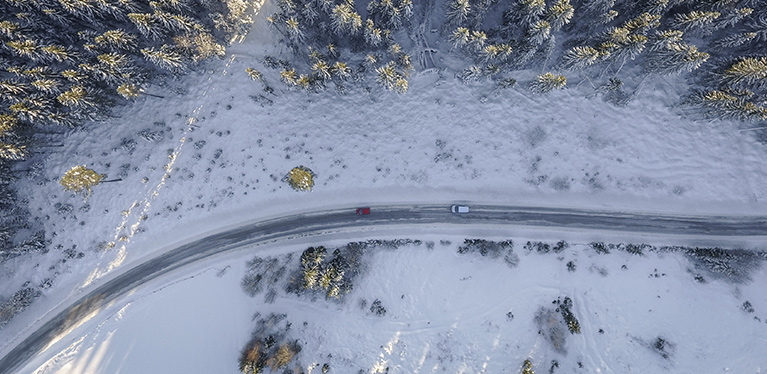
Planning a winter journey or heading to the mountains? The right equipment can make driving in cold, snowy and icy conditions more straightforward. Avis offers winter equipment at selected rental locations; these include winter tyres, snow chains and ski or snowboard racks.
Availability and requirements vary by country and rental location. Some destinations require specific winter equipment by law, while others may make it compulsory only when road conditions demand it. If you’re driving abroad, check the rules for every country on your route before you travel.
Winter tyres for cold-weather driving
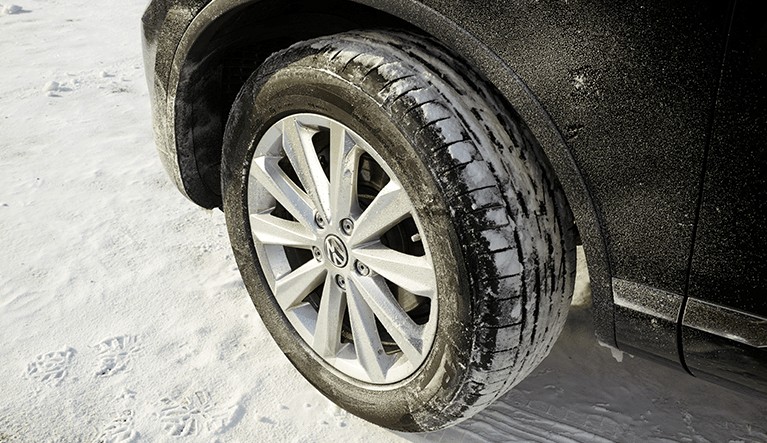
Winter tyres are designed to provide additional grip and control in cold conditions, particularly on snow and ice. Their softer rubber compound is designed to remain more flexible at lower temperatures, while the tread pattern helps disperse water and provide traction.
Winter tyres are marked with the three-peak mountain snowflake symbol. They are different from all-season and M+S (mud and snow) tyres, which have different characteristics and legal uses depending on the country.
The often-used 7°C guideline is useful when considering winter tyres: below this temperature, winter tyres can offer advantages in grip and handling. However, legal requirements are determined by the destination and prevailing conditions, not simply by the temperature.
At selected Avis rental locations, winter tyres may be included where they are required by local regulations. Availability, charges and fitting arrangements vary by country.
Prepare for your winter journey
Winter driving can mean shorter daylight hours, changing weather and rapidly deteriorating road conditions. Before you leave, check the forecast and road conditions, make sure you have the equipment required for your route and allow extra time for your journey.
If you are hiring a car abroad, check the winter equipment available at your Avis rental location before travelling. Requirements and availability vary by country and branch, particularly for winter tyres, snow chains and ski or snowboard racks.
For advice about the equipment available for your rental, contact the Avis Reservations team.
Legal requirements for winter tyres
There is no general UK legal requirement for passenger cars to use winter tyres. However, winter conditions can make them useful, particularly in areas that experience prolonged snow and ice.
Winter tyres UK: When there is a cold snap or in parts of the UK prone to prolonged snow fall, you might consider winter tyres are helpful. Drivers in upland areas of the north of England and Wales often choose to fit winter tyres. While there is higher demands for winter tyres in Scotland where snowy winters are expected, it is still not a legal requirement to fit winter tyres.
The rules change when you travel abroad.
Winter tyres France: In France, when driving in most mountainous areas between November 1 and March 31, all drivers must store snow chains in their vehicle or have winter tyres fitted. Failure to comply with this requirement may result in a fine and the immobilisation of the vehicle. We recommend that you check in advance whether your travel itinerary includes one or more road sections where this French mountain driving law is in force.
Winter tyres Germany: In Germany winter tyres must be fitted by law when there is ice and snow on the ground. During the winter season (15 November to 15 March), our rental vehicles hired in Germany are all equipped with winter tyres as standard. The fee for this is already included in the rental price but please also check before you travel.
Winter Tyres in Scandinavia
Regulations in Denmark mean that when driving on roads covered by snow, ice or slush, vehicles must be equipped with winter-approved tyres. Avis recommends that all customers book winter tyres during periods when temperatures may fall below 7°C. Winter-approved tyres must be pre-booked to guarantee availability at the time of pick-up. These tyres can be added during the booking process at a cost of up to DKK 125 per day. If you rent the vehicle for more than 10 days, you will only be charged for a maximum of 10 days and may use the tyres for the entire rental period (up to 30 days). Please note that if the winter-approved tyre option is declined, the renter is solely responsible for any fines or penalties incurred for driving with unsuitable tyres in winter conditions. If you are unsure whether your rented vehicle meets the applicable requirements, please contact us before starting your journey.
When driving in Norway during the winter months, you must have tyres that provide good grip on snow and ice. This usually means using proper winter tyres from 1 November to around 1 April, as conditions can be challenging. In northern parts of the country, winter conditions often last longer, and drivers may need winter tyres from mid-October. All our rental cars come with winter tyres as standard throughout the winter season, so you can enjoy a safe and comfortable drive without worrying about tyre rules or changing weather conditions.
In Sweden, winter tyres are required from 1 December to 31 March or when wintry road conditions exist, such as snow, ice or frost on the road. Studded tyres are allowed from 1 October to 15 April, but note that they are banned on certain central streets in Stockholm. All our rental cars are equipped with winter tyres throughout the winter season, so you can drive safely without worrying about tyre rules or changing weather.
Snow chains for hire
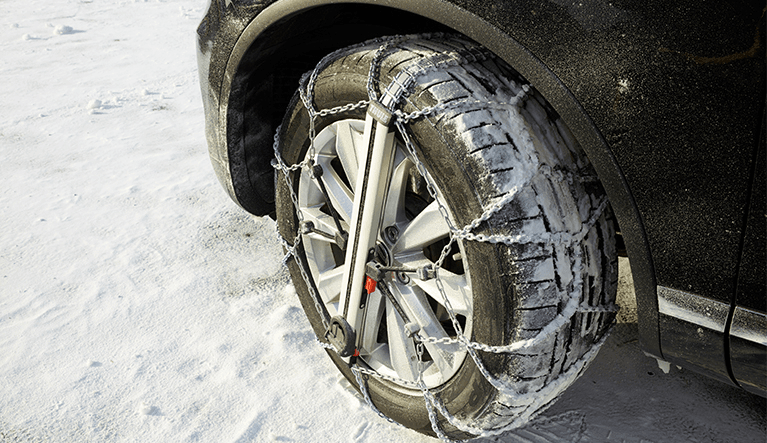
Snow chains for tyres are lengths of steel-linked chain that wrap around a car’s tyres to increase traction in heavy snow and on black ice. They can also aid stability in wintry conditions where existing standard tyres are fitted to the car. However, snow chains can only be used on snow covered roads - if they are driven over cleared or gritted tarmac, there is a risk of damage to both the tyres and the road surface.
Snow chains are designed in a range of configurations including ladders (that are rectangular and look like a ladder when laid out), diagonal or diamond shapes that form a net over the tyre. There is a different technique for attaching each type of snow chain. Snow chains need to be fitted to all 4 of the car’s tyres and if you are hiring a car and carrying snow chains, you’re advised to practice fitting them to the car in clear conditions in case of sudden snow fall or if conditions change during your drive.
A number of countries in Europe make carrying snow chains for cars mandatory in mountainous regions. These include the need to carry snow chains in the boot of the car in parts of France, Germany, Sweden, Switzerland, Norway, Italy, Austria and Andorra. In some countries, heavy fines can be issued for not carrying snow chains.
Snow socks can be an alternative to snow chains in certain circumstances. They are fabric coverings that are fitted to tyres to increase traction and stability on the road. Like snow chains they should only be used in snowy conditions. The benefit of snow socks is that they are quick and easy to fit and are compatible with ABS and ESP electronic safety systems.
Tyre chains for snow are available to rent at certain branches. They can be reserved during the booking process but the option to book is only available at participating branches. Prices vary between countries.
Ski and snowboard racks
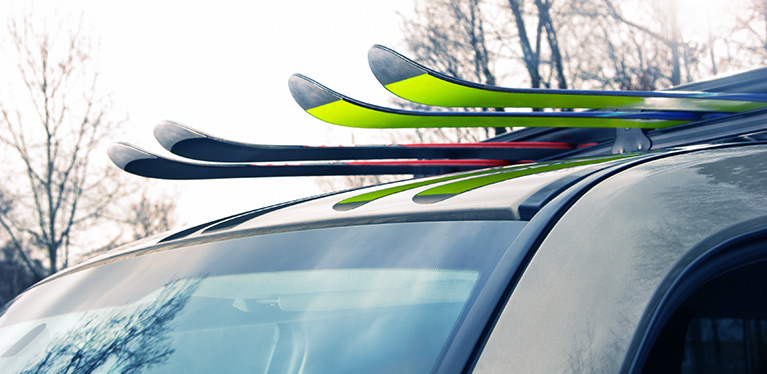
Ski and snowboard racks for cars are a great piece of winter car kit designed to carry your skiing equipment on your car roof keeping your skis and snowboards safe and stable during your drive. and freeing up space inside the car.
A ski rack for your car is just one of the winter car accessories offered by Avis that might be come in handy for your trip to the mountains.
Snowboards can also be fitted to our magnetic ski racks.
Available at selected Avis branches, racks can be reserved during the booking process but the option to book is only available at participating branches. Prices vary between countries.
If you want more information on our winter kit for cars or need to add your ski or snowboard rack to an existing booking, just call our reservations hotline.
Winter car equipment FAQs
No. There is no general legal requirement for passenger cars in the UK to have winter tyres. They can nevertheless be useful in prolonged cold, snow and icy conditions, particularly in areas where winter weather is more severe.
Avis does not currently offer winter equipment at UK rental destinations, so check the equipment available at your chosen rental location if you are travelling abroad.
It depends on the country, the road and the conditions. European winter-equipment rules are not the same everywhere and can be based on dates, weather conditions, road signs or specific regions.
For example, France has winter-equipment requirements in designated mountain areas between 1 November and 31 March. In Germany, winter tyres are required when roads are affected by ice or snow.
Check the current rules for every country on your route before you travel.
Yes. “Snow tyres” is a term commonly used for tyres designed for winter conditions, although “winter tyres” is now more widely used.
Winter tyres are designed to perform in cold conditions, including on snow and ice. They are identified by the three-peak mountain snowflake symbol.
Winter tyres are generally associated with temperatures below 7°C because their rubber compound is designed to remain flexible in colder conditions.
However, the decision to use winter tyres should not be based on temperature alone. Road conditions, your destination and local legal requirements are also important.
Winter tyres are available at selected Avis rental locations. Where winter tyres are required by local regulations, they may be supplied with the vehicle and the cost may be included in the rental price.
Where winter tyres are not automatically provided, they may be available for an additional charge depending on the rental location. Availability and pricing vary, so contact Avis in advance if you require winter tyres for your journey.
Snow chains are available at selected Avis rental locations. Availability varies by country and branch, and they may be available to reserve during the booking process.
Avis cannot fit snow chains for you or arrange for them to be fitted. If you plan to carry chains, make sure you understand how to fit them before you encounter snowy or icy conditions.
Snow-chain requirements vary between countries and individual roads. In some mountainous areas, signs can require drivers to carry or use snow chains when conditions demand them.
Countries including France, Germany, Austria, Italy, Switzerland, Norway and Sweden have rules relating to winter equipment or snow chains, but the requirements are not identical. Check the current rules for your specific route before travelling.
Selected Avis locations offer ski and snowboard racks. Racks are only compatible with certain vehicles, so your vehicle choice may affect whether a rack can be supplied.
Charges vary by rental location and country. Avis recommends giving at least 24 hours’ notice if you need a ski rack. If you need one sooner, contact the Reservations team.
In some cases, yes. Avis can add available extras to an existing reservation, subject to the rental location and equipment availability.
Winter equipment should be requested as early as possible, particularly during busy ski and winter travel periods. Contact the Avis Reservations team to check what is available for your rental.
Here’s a handy summary of the rules for winter tyres and rules for snow chains across Europe.
Austria
Between 1 November and 15 April, it is mandatory to have winter tyres on all car wheels or snow chains on drive wheels. Outside these months the use of winter tyres can be mandatory too. Winter tyres must have a profile of minimum 4mm. Snow chains may be used when conditions require it: the road needs to be entirely covered in snow or black ice. The use of snow chains is not allowed in the Arlberg Tunnel.
Czech Republic
Winter tyres are mandatory between 1 November and 31 March. They need to have the M+S label (Mud & Snow) and a tread depth of minimum 4mm. During the winter months it is also mandatory to carry snow chains in your car. However, you are only allowed to use these in cases of black ice or snow.
Croatia
Winter tyres are mandatory in wintery conditions, need to have a profile of minimum 4mm and show the M+S label (Mud & Snow). Studded tyres are not permitted. Snow chains are mandatory in cases of black ice or when there is more than 5cm of snow.
Finland
Winter tyres are compulsory between 1 December and 1 March. Snow chains are allowed when weather circumstances require it.
France
In France, all drivers must store snow chains in their vehicle or have winter tyres fitted in most mountainous areas between November 1 and March 31. Failure to comply with this requirement may result in a fine and the immobilisation of the vehicle. We recommend that you check in advance whether your travel itinerary includes one or more road sections where the mountain law is in force.
Germany
In wintry conditions, cars must have the appropriate winter equipment. In Germany, this also includes winter tyres, windscreen washer fluid and proper windscreen wipers. Under certain circumstances the use of snow chains can be mandatory (this will be signposted). The same rules apply to 4x4’s. When driving with snow chains, a speed limit of 50 km/h applies.
Italy
On mountain roads, the use of winter equipment (winter tyres and/or snow chains) can be mandatory. If this is the case, it will be signposted. In the Aosta Valley, winter tyres are compulsory between 15 October and 30 April.
Luxembourg
Winter tyres are mandatory between 1 October and 31 March. The recommended thread depth is 4 mm. Snow chains are allowed if there is ice or snow on the roads.
Norway
If wintry conditions require it, the car needs to have the appropriate winter equipment (winter tyres, snow chains or studded tyres). The tread depth has to be minimum 3mm. In cases of black ice or snow, snow chains are mandatory for cars with summer tyres.
Slovenia
Between 1 November and 15 April, it is mandatory to use winter tyres with a profile of minimum 3mm in wintery conditions. The use of studded tyres is not allowed. It is mandatory to carry snow chains in your vehicle if it doesn’t have winter tyres.
Slovakia
It is mandatory to use winter tyres with the M+S label (Mud & Snow) in cases of black ice or snow. The use of studded tyres is not allowed. During the winter months, it is mandatory to carry snow chains in your vehicle.
Sweden
Winter equipment (winter tyres, snow chains or studded tyres) is mandatory between 1 December and 1 April if the weather conditions require it. In cases of black ice or snow, the use of snow chains is allowed.
Switzerland
Although winter tyres are not compulsory, it is advisable to use them because you will be fined if you cause nuisance on the road. Snow chains are mandatory when road conditions require them (this will be signposted). When driving with snow chains, the speed limit is 50 km/h. The use of snow chains is not allowed in the Selisberg Tunnel, the St Gotthard Tunnel and the San Bernardino Tunnel.